Crime is falling. Fear isn't. What that gap costs a street.
Crime in Britain has fallen dramatically over the past three decades, yet public fear remains high. Here’s why the gap between national crime perceptions and what happens on your own street matters.
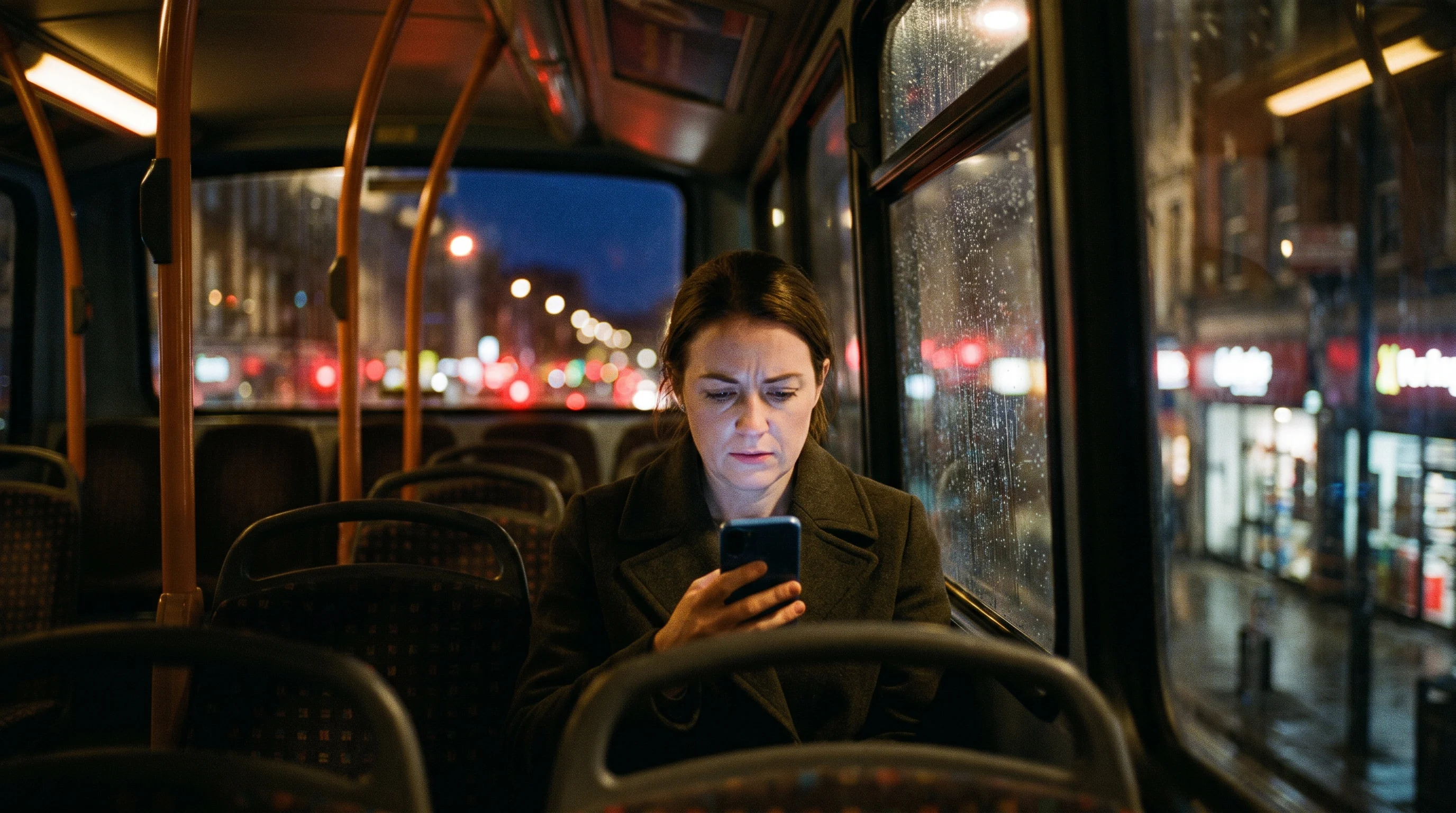
Ask someone in Britain whether crime is going up, and most will say yes. Ask them whether crime is going up on their road, and something interesting happens. Most say no.
That gap, between the country we think we live in and the street we actually live on, is one of the best-documented findings in British social research. It is also, we think, the real problem worth solving. Not because the fear is irrational, but because it is expensive, and because almost nothing in the way information reaches you is designed to close it.
First, what is actually happening
The honest answer is more interesting than either side of the argument usually admits.
Over three decades, the fall in crime in England and Wales has been enormous. The Crime Survey for England and Wales (CSEW) asks tens of thousands of people directly about their experiences, which makes it unaffected by changes in how police record things. It estimates that theft is now 77% lower than its 1995 peak, violence with or without injury 78% lower, and criminal damage 81% lower (ONS, 2026). Police-recorded homicide in the year to March 2026 was the lowest since current recording practices began in 2003, and homicides involving a knife or sharp instrument were the lowest since 1991.
But "crime is falling" is a claim about decades, not about last Tuesday. In the most recent year, the ONS reported no statistically significant change in headline crime: an estimated 9.6 million incidents against 9.4 million the year before. And several things went up.
- Fraud victims rose 10%, to 3.8 million people. Fraud is now up 32% on 2017.
- Harassment rose from 8.3% to 10.0% of adults, a statistically significant increase.
- Anti-social behaviour experienced or witnessed rose from 35.5% to 40.9%, though the ONS notes part of that was caused by a change in how the question was asked.
- Other household theft rose 21%, driven by theft from outside the home.
So the accurate sentence is not "crime is down". It is this: most kinds of crime that touch most people are dramatically lower than a generation ago, the decline has largely flattened, and fraud has gone the other way. Anyone who tells you it is simpler than that is selling something.
Now, what people believe
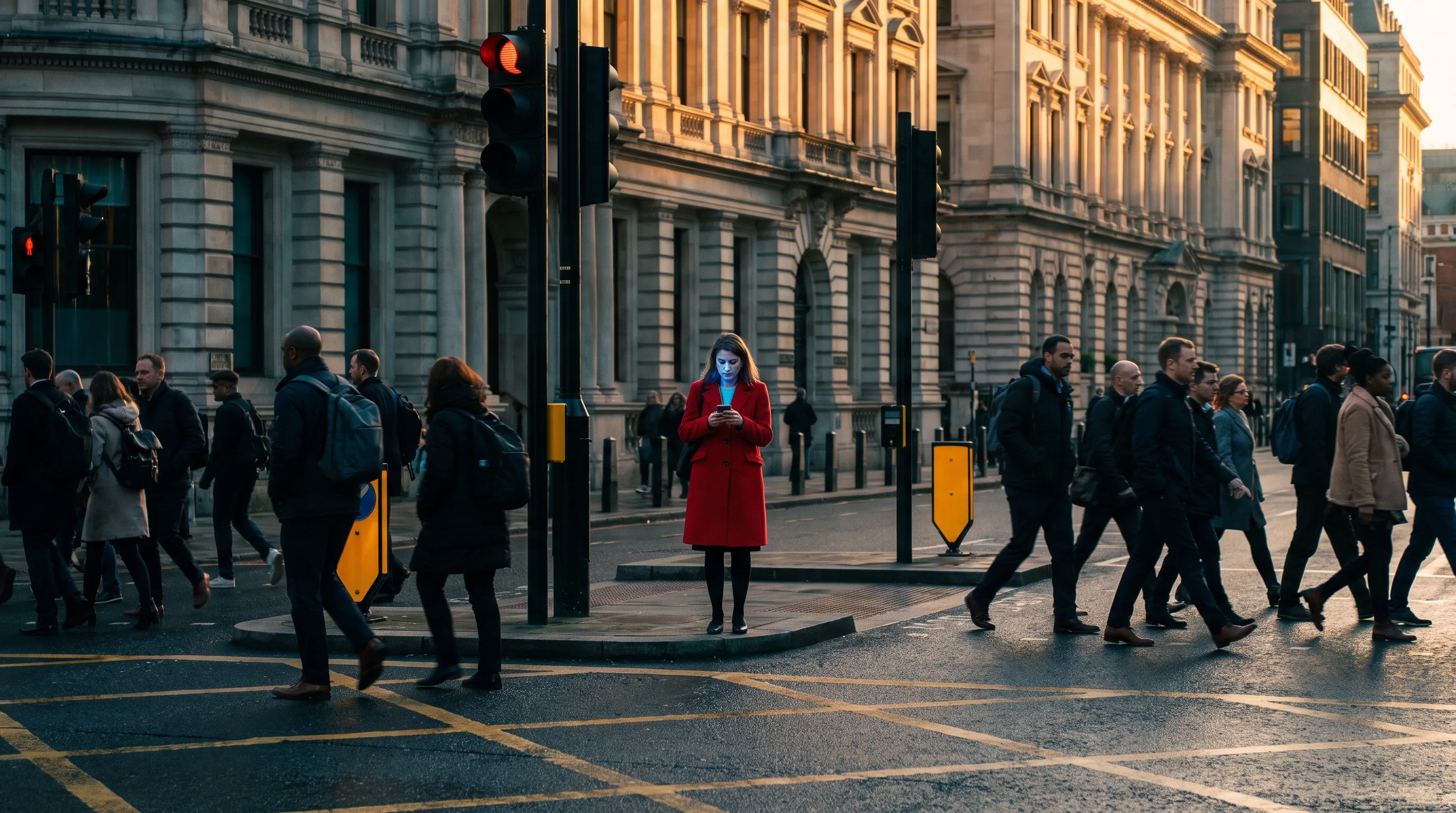
In August 2026, the Policy Institute at King's College London published Wrongful convictions? Misperceptions about crime among the UK public, based on YouGov surveys of around 1,800 UK adults. The findings are stark.
Asked what share of the population had personally experienced crime in a year, the public's median guess was 27%. The real figure is 9.7%. The public overestimate by almost three times.
Of five crime types tested, only one has actually risen since 2010, and that one is shoplifting. The public correctly identify it. On every other measure, perception runs in the opposite direction to reality. 83% think mobile phone theft has risen, when it has fallen by around 70%. 62% think vehicle theft has risen, when it has fallen by around half. 37% think murder has risen, when it is down around 20%.
Ipsos found the same shape in November 2025. 67% of Britons thought crime had increased across the UK in the previous twelve months, up from 58% five months earlier.
The bit that should change how you think about this
Here is the finding we keep coming back to.
In the Ipsos data, while 67% thought crime had risen nationally, only 39% thought it had risen in their own area. While 87% called crime a big problem in the UK as a whole, only 40% said so of their neighbourhood. King's found the same pattern looking forward: 65% expect crime to rise nationally over the next three years, but only 40% expect it in their own area.
People are dramatically more accurate about the place they can actually see.
That is not a coincidence, and it points straight at the cause. Ipsos asked people who thought crime had risen why they thought so. 78% cited things they had seen on the news, up from 68% five months earlier. Professor Bobby Duffy, who led the King's study, puts it plainly: "'If it bleeds, it leads' is a key news value for a reason, so the picture we're fed points relentlessly to the frightening and the violent."
Where you have first-hand evidence, you use it, and you are roughly right. Where you don't, you fall back on whatever you have been shown. And what you have been shown is, by construction, the worst thing that happened anywhere in the country that day.
Why a gap between fear and risk is not a harmless gap
It would be easy to read all this as "people are wrong, do please calm down". That would be both patronising and incorrect, because fear has real costs that never show up in a crime statistic.
In February 2026, YouGov found that 71% of women had changed their route to avoid walking in the dark during the darker months.4 ONS research found that half of women feel unsafe walking alone after dark on a quiet street near their own home, and four in five feel unsafe in a park or open space. That is not a statistical error. It is a tax on people's freedom of movement, paid nightly, mostly by women.
Fear also shapes what we ask for. The King's study found that misperceptions travel with distrust and with demand for harsher policy. Among people who said fear of crime badly affected their quality of life, 59% wrongly believed murder had risen, against 22% of those less affected.
And then there is the strangest finding of the lot. The public guess that 60% of people don't feel safe walking alone after dark. The real figure is 39%. We are not just afraid. We overestimate how afraid everyone else is, which makes the street feel emptier and less friendly than it actually is.
Where we think Glome fits
We build a safety app, so you would be entitled to expect us to argue that things are terrible. We're not going to, because it isn't true and because it isn't the problem.
The problem is that the two things you might reasonably want to know, what is actually happening near me and who else is here, are the two things nobody reliably tells you. National news is a poor instrument for a local question. A neighbourhood WhatsApp group is unverified and skews towards whoever posts most. Police data arrives late, and at a scale that cannot answer "should I walk this way home".
The evidence says people reason well about their own street when they have something to reason with. So our job is not to add another vivid story to the pile. It is to make one street legible to the people who live on it: real reports, from people who have confirmed they actually live there, at a resolution that matches the decision you are trying to make.
Sometimes that will mean showing you something happened. More often, and genuinely most nights, it will mean showing you nothing did. We think that second one is the more valuable product, and it is the one nothing else in your life is currently offering.
The good kind of quiet is still information. It just doesn't lead the news.
A note on sources
Where we cite crime levels we use the Crime Survey for England and Wales rather than police-recorded crime. The ONS is explicit that the survey "is better for tracking long-term trends than police recorded crime because it is unaffected by changes in reporting or recording practices" Police-recorded crime lost its accredited status in 2014 over concerns about data quality, and rises in recorded violence over the past decade are substantially driven by improvements in recording rather than by more violence.
References
1: Office for National Statistics (2026) Crime in England and Wales: year ending March 2026. Statistical bulletin, released 23 July 2026. Available at: https://www.ons.gov.uk/peoplepopulationandcommunity/crimeandjustice/bulletins/crimeinenglandandwales/yearendingmarch2026
2: The Policy Institute, King's College London (2026) Wrongful convictions? Misperceptions about crime among the UK public. Published 17 August 2026. Survey conducted by YouGov; total sample 1,797 UK adults (2,164 for the victimisation question); fieldwork 23 to 27 March 2026. Available at: https://www.kcl.ac.uk/news/public-perceptions-of-crime-at-odds-with-reality-study-finds
3: Ipsos (2025) Majority of Britons think crime is a big problem, with 6 in 10 believing it has risen over the past year. November 2025. Available at: https://www.ipsos.com/en-uk/majority-of-britons-think-crime-is-a-big-problem-6-in-10-believe-it-has-risen-over-the-past-year
4: YouGov for Active Travel England (2026). Survey of 2,125 UK adults aged 18+; fieldwork 17 to 18 February 2026. Reported in Active Travel England, Nationwide plans announced to design safer streets. Available at: https://activetravelengland.gov.uk/news/nationwide-plans-announced-design-safer-streets-9-10-women-report-feeling-unsafe-walking-night
5: Office for National Statistics (2021) Perceptions of personal safety and experiences of harassment, Great Britain: 2 to 27 June 2021. Available at: https://www.ons.gov.uk/peoplepopulationandcommunity/crimeandjustice/bulletins/perceptionsofpersonalsafetyandexperiencesofharassmentgreatbritain/2to27june2021