Text Me When You Get Home" Is a System. It Has One Flaw
Text me when you get home” is a simple personal safety system used by millions. But relying on someone to notice a missing message has a flaw. Here’s how technology could make check-ins safer without constant location tracking
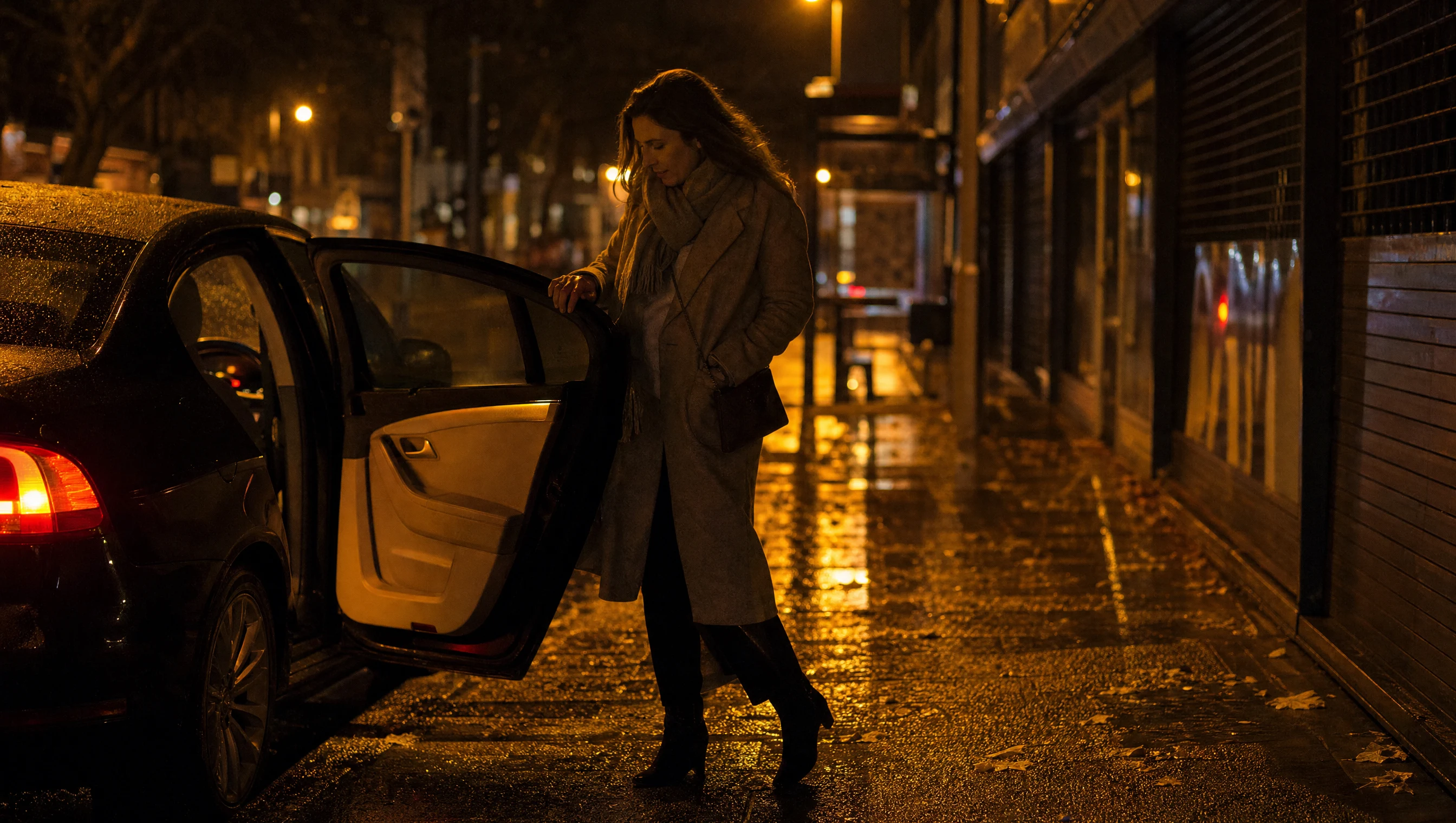
Almost everyone reading this has either sent that message or been asked to send it. It's said at the door, in the pub car park, at the end of a phone call. It costs nothing, requires no app, and it's probably the most widely used piece of personal safety infrastructure in Britain.
It's also doing more work than most people realise. It isn't small talk. It's a system, with a trigger, a check and an escalation, invented by ordinary people because nothing else covers the bit of the journey where you're on your own.
But it has one flaw, and it's a serious one. This piece is about what that flaw is, why the obvious fix makes things worse for some of the people who need it most, and what a better version would actually have to do.
Key Takeaways
- The cost is measurable: 88% of women have felt unsafe walking alone after dark, and 38% feel that way "always" or "often".
- People change their behaviour: 71% have changed their route to avoid walking in the dark, and 57% have paid for a taxi or taken a lift instead of walking.
- It isn't only about fear: 46% of women experienced unwanted behaviour or harassment while walking alone in the past year, rising to more than 7 in 10 of those aged 18 to 24.
- Infrastructure helps, modestly: the best evidence on street lighting finds a 14% reduction in crime across 21 studies and nearly 50 years.
- The ritual's flaw: it depends on someone noticing an absence, and people are very poor at noticing things that don't happen.
- The obvious fix has a dark side: Refuge found 72% of women accessing its services had experienced tech abuse, and location tracking by a partner is now so normalised that fewer than 1 in 3 people would report it.
- The better version watches the clock, not the walk.
What Feeling Unsafe Actually Costs
Let's start with what this is doing to people's lives, because the numbers are more specific than the conversation usually is.
In March 2026, Active Travel England published YouGov polling of 2,125 UK adults. Almost nine in ten women, 88%, said they had felt unsafe walking alone after dark. More than a third, 38%, said they feel that way "always" or "often".
Then it gets concrete. In the past year, 71% of women changed their route to avoid walking in the dark during the winter months. And 57% used another form of transport altogether, a taxi or a lift from someone, rather than walk.
Read that last one again. More than half of women have paid money or asked a favour to avoid a journey they could have made on foot.
That's the part that tends to go unsaid. This isn't only an emotional cost. It's a financial one, paid in fares, and a social one, paid in favours, and a practical one, paid in time. It falls almost entirely on one half of the population, and it recurs every winter.
The knock-on effects are visible too. 36% of women aged 18 to 24 say personal safety fears are stopping them walking more in their own neighbourhood. That's a third of young women partially withdrawing from their own streets.
This Isn't Only About Fear
There's a version of this article that would be dishonest, and it's worth naming it so you know this isn't it.
We've written before about the gap between how dangerous Britain actually is and how dangerous it feels, and about how the information reaching people is sorted by how frightening it is rather than how true it is. All of that still stands. So it would be easy to file "women feel unsafe walking home" under misperception, and move on.
That would be wrong, and the same survey shows why. 46% of women experienced unwanted behaviour or harassment while walking alone in the past year. Among women aged 18 to 24, that figure rises to more than seven in ten.
That isn't a feeling. It's a reported experience, in the last twelve months, by nearly half of the women asked.
It also lines up with the official statistics. The Crime Survey for England and Wales found harassment rose from 8.3% to 10.0% of all adults in the year to March 2026, which the ONS records as a statistically significant increase. Harassment is one of the few categories of crime genuinely going up.
So the distinction matters. The risk of serious violence on a given walk is low and lower than most people assume. The likelihood of being harassed while walking alone, if you're a woman, is close to a coin flip over the course of a year. Those are different claims, and conflating them is how this subject usually goes wrong in both directions.
The Freedom Gap
There's one more finding worth sitting with, because it explains why this matters beyond safety.
60% of all respondents, men and women, disagreed that women and girls have as much freedom as men and boys to walk wherever and whenever they like. Among women, 67% perceive that lack of equal freedom.
And 75% of everyone surveyed said they worry about the safety of a woman or girl in their own family when she walks alone.
Three quarters. That's the person waiting for the text.
The Minister for Safeguarding and Violence Against Women and Girls, Jess Phillips, framed the policy response like this:
"Women and girls deserve to feel safe simply going about their lives, whether that is walking down the street, travelling, or using public spaces after dark. I welcome this work to design streets that make women feel safer, shifting responsibility away from women and onto the spaces and behaviours that put them at risk."
That last clause is the important one, and it's the standard any solution should be held to. Most personal safety advice does the opposite. Don't walk alone. Text a friend. Stay on lit roads. Take a different route. All of it moves the work onto the person at risk, and most of it is what the 71% and the 57% are already doing.
What's Being Done, and Why It Isn't Enough Yet
The policy response is real and it deserves credit.
Active Travel England is issuing new guidance to councils in 2026 on designing streets that are safer for women and girls, covering better lighting, improved visibility, and walking routes along busier roads that are overlooked by other people. Councils can draw on ATE's £626 million funding allocation to pay for it, and the work sits inside the government's stated ambition to halve violence against women and girls within a decade.
Individual schemes are already running. Nottinghamshire installed 27 new CCTV cameras and upgraded 200 streetlights in locations where women had flagged feeling unsafe. Leicester and Manchester have removed underpasses and replaced them with street-level crossings. Merseyside Police are launching well-lit "Halo Points" linked to emergency services.
And the evidence supports the approach. Lighting is what people ask for most: 63% of women said more street lighting would make them feel safer, the single biggest factor in the survey. The most thorough review of whether it works, covering 21 studies across four countries and nearly half a century of evaluations, found improved street lighting associated with a 14% reduction in crime compared with control areas.
Fourteen percent is a genuine result. It's also, honestly, not a solution.
Infrastructure is slow. It's unevenly distributed, and it arrives first in places with active councils and organised residents. Most importantly, none of it helps with the specific walk you're doing tonight, on a route nobody has redesigned yet, in the twenty minutes between leaving one safe place and reaching another.
Which is why people improvise.
So People Improvise
"Text me when you get home."
It's such a fixture that when the Active Travel England polling was published, at least one outlet ran the story under exactly that headline. Everyone recognised it immediately.
And as an improvised system, it's rather good. Look at what it actually does. It establishes that a journey is happening and roughly how long it should take. It nominates someone to care about the outcome. It sets an expectation of a confirmation. And if that confirmation doesn't arrive, it triggers a human response, a text, then a call, then something more.
Trigger, check, escalation. That's a safety protocol, arrived at collectively by people who were never asked to design one.
It has a second quality that's easy to miss and turns out to be the important one. It's minimal. Your friend doesn't learn where you were, who you were with, what route you took or how long you lingered. She learns exactly one thing: you got in. Nothing else about your evening is any of her business, and the ritual respects that without anyone ever having to say so.
The Flaw: Nobody Notices a Non-Event
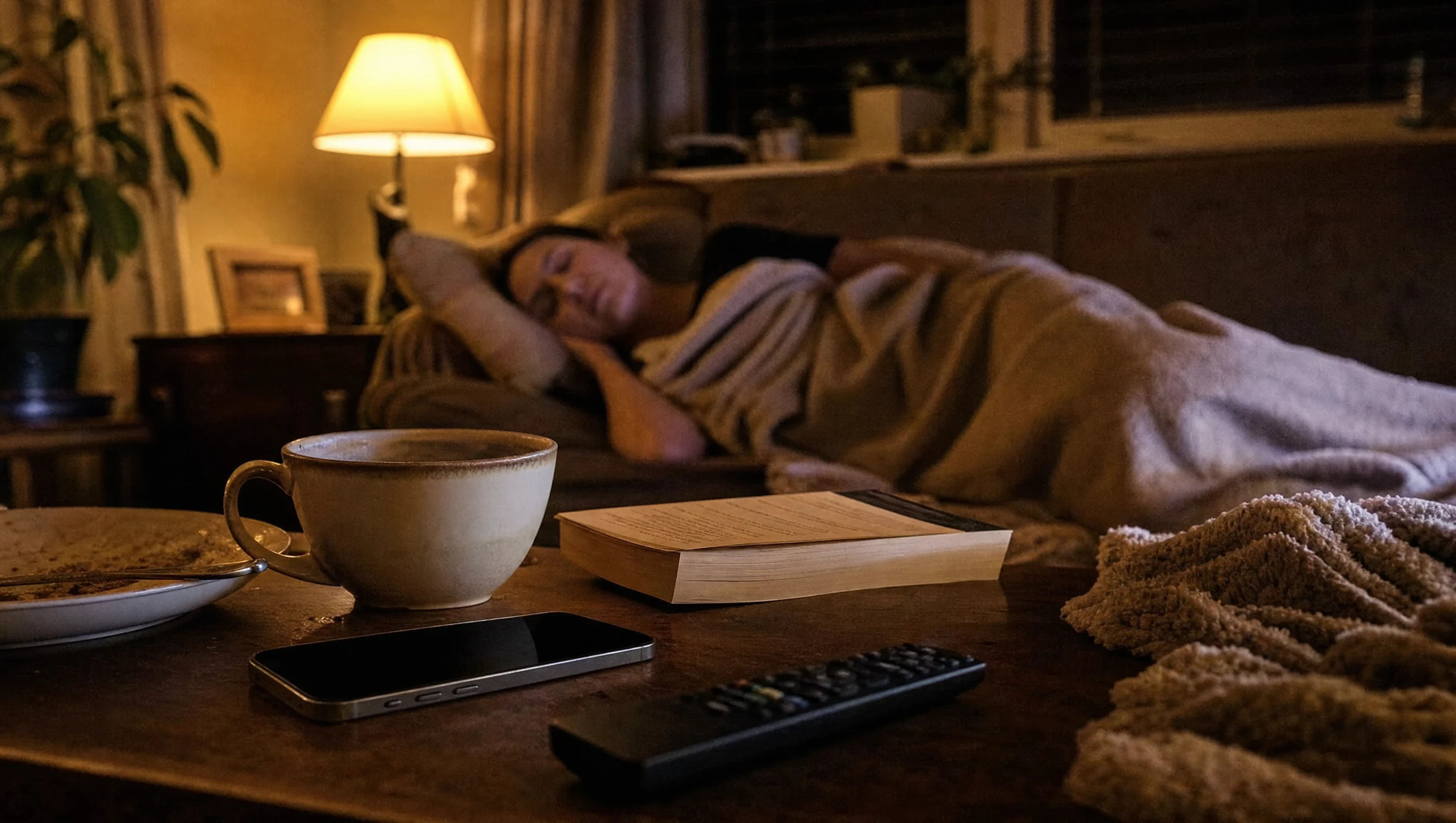
Here's where it breaks.
The entire system rests on somebody noticing that a message didn't arrive. And that's a much harder cognitive task than noticing one that did.
A text arriving is an event. Your phone lights up, you glance at it, you register it. A text not arriving is an absence, and absences don't announce themselves. There's no notification for "nothing happened". You have to actively remember to check, at some unspecified point later, against a deadline nobody agreed out loud, while you're doing something else or asleep.
The failure mode is silence. And silence looks exactly like everything being fine.
Almost everyone who has used this ritual has, at some point, woken up in the morning and realised they never checked. Usually nothing had happened. The ritual didn't help on those nights, it just felt like it did.
There's a second failure that's more subtle. The deadline is almost never stated. "Text me when you get home" contains no time. So even a friend who's paying attention has no threshold to act on. At what point does not-yet-texted become should-I-call? Half an hour? Two hours? People end up waiting far longer than they'd like, because raising the alarm too early feels embarrassing and nobody wants to be the person who called the police about a friend who went to a night bus.
Ambiguous deadline, plus a failure mode made of silence, plus a check that depends on human attention at 1am. That's the flaw.
Why "Just Share Your Location" Is the Wrong Fix
The obvious answer is continuous location sharing. Turn it on, let the people who care watch the little dot move across the map. Several large apps are built on precisely this, and for plenty of families it works fine.
But it should not be the default, and there are two reasons.
The first is practical, and it's rarely discussed. A shared map only works if somebody is looking at it. At 1am the people who love you are asleep. Live location produces no alert, no escalation and no action on its own. It's a feed, not a system, and it's a feed with an audience of nobody at the exact hour it would matter. The improvised ritual, for all its faults, at least has an escalation built in.
The second reason is more serious. Location sharing between people who know each other has a well-documented dark side.
Refuge, the UK's largest domestic abuse charity, reported that 72% of women accessing its services had been subjected to tech abuse. Its 2021 national survey estimated that around two million women in the UK, roughly one in six, had experienced online abuse from a current or former partner. Location tracking, alongside demands for phone access, is a recurring feature of coercive control, and it's effective precisely because it can be presented as care.
The most telling finding is about how normal it has become. A UK-wide poll commissioned by Refuge found fewer than one in three people would report forms of digital coercion such as location tracking or a partner demanding access to their phone, if it happened to them or someone they knew.
That's the problem in a sentence. A behaviour that is a recognised component of coercive control is now so ordinary that most people wouldn't name it as abuse.
Which creates an asymmetry that any safety product has to take seriously. Once continuous location sharing is the default, switching it off stops being a setting and becomes an accusation. For most people that's a mild awkwardness. For someone in a controlling relationship, it's a risk they can't take. Design that defaults to surveillance quietly removes the exit for exactly the people with the least room to manoeuvre.
What a Better Version Would Do
So what would actually fix the ritual, without breaking it?
Start from what the ritual already gets right and keep it. It's chosen, not imposed. It's minimal, disclosing one fact rather than a map. And it ends when you arrive.
Then fix only the broken part, which is the noticing.
Make the deadline explicit rather than implied. Not "text me when you get home" but a stated time by which you expect to be back. That removes the ambiguity that stops people acting.
Move the watching from a person to a clock. Nobody should have to stay awake to keep someone safe. Software is extremely good at one thing humans are bad at, which is registering that a specific thing did not happen by a specific time.
Escalate to people you chose, not to a stranger or an algorithm. The ritual's strength is that it runs on an existing relationship. A system that rings a call centre is solving a different problem.
And share nothing by default. The people looking out for you need to know two things: that you're walking, and whether you arrived. Not always your route, not your speed, not where you stopped. If you want to share live location on a particular night, that should be a decision you make for that walk, not a permanent state you're enrolled in and have to justify leaving.
That's the whole design, and the sentence it comes down to is this. It doesn't require watching you walk. It requires watching the clock.
Your Questions, Answered
Isn't this just telling women to manage their own safety again?
Partly, and that tension is real. The Minister is right that responsibility should shift onto the spaces and behaviours that create the risk, and street design is the more important fix. But the redesign will take years, and people are walking home tonight. Better tools in the meantime aren't a substitute for that work.
Doesn't an app make people more frightened?
It can, and plenty do. That's a design choice rather than an inevitability. A tool that pings you about every incident in your area is making things worse. A tool that quietly notices you got home and says nothing at all on the nights that go normally is doing something different.
Why not just call someone while you walk?
Loads of people do, and it works. It also requires the other person to be free, awake and willing to stay on the line for twenty minutes, which is a lot to ask several times a week.
What about the times when nothing is wrong but you just forget to check in?
This is the hardest problem in the whole design and it deserves its own article. Get the escalation wrong and you generate false alarms, and false alarms are how safety tools become things people ignore. Grace periods, a chance to add time, and a very clear "I'm fine" are the difference between a system people trust and one they mute.
What to Take From This
The most widely used personal safety tool in the country is a sentence people say at the door. It works better than it has any right to, because it's chosen, it's minimal, and it ends when you're home.
Its one flaw is that it asks a human being to notice something that didn't happen, at the hour they're least able to. That's a small, specific, fixable gap, and filling it doesn't require anyone to be tracked, watched or frightened.
It requires someone to be paying attention to the clock. That can be a machine, and honestly it should be, because it's the only part of the job a person shouldn't have to do.
Glome is building street-level digital safety tools for the UK, including a way to let the people you choose know you're walking and hear about it if you don't arrive. It'll be available when the app launches.
References
1: Active Travel England (2026) Nationwide plans announced to design safer streets as 9 in 10 women report feeling unsafe walking at night, published 25 March 2026. Polling by YouGov Plc, total sample 2,125 UK adults aged 18+, fieldwork 17 to 18 February 2026, conducted online and weighted to be representative of all UK adults. https://activetravelengland.gov.uk/news/nationwide-plans-announced-design-safer-streets-9-10-women-report-feeling-unsafe-walking-night
2: Welsh, B.C., Farrington, D.P. et al. (2022) 'The impact and policy relevance of street lighting for crime prevention: A systematic review based on a half-century of evaluation research', Criminology and Public Policy. 21 studies across four countries covering 1974 to 2021. https://onlinelibrary.wiley.com/doi/abs/10.1111/1745-9133.12585
3: Refuge, reported in openDemocracy, How abusers use tech to perpetrate violence against women and girls. Includes Refuge's finding that 72% of women accessing its services had experienced tech abuse, its 2021 national survey estimate of around two million women affected by online abuse from a current or former partner, and polling on willingness to report digital coercion. https://www.opendemocracy.net/en/technology-domestic-abuse-violence-against-women-and-girls-refuge-government-ofcom/ See also Refuge's written evidence to Parliament: https://committees.parliament.uk/writtenevidence/109329/pdf/
4: Office for National Statistics (2026) Crime in England and Wales: year ending March 2026, released 23 July 2026. Harassment rose from 8.3% to 10.0% of adults, recorded by the ONS as a statistically significant increase. https://www.ons.gov.uk/peoplepopulationandcommunity/crimeandjustice/bulletins/crimeinenglandandwales/yearendingmarch2026
5: South West Londoner (2026) 'Text me when you get home': Nine in ten women say they feel unsafe walking at night. https://www.swlondoner.co.uk/news/02072026-nine-in-ten-women-unsafe-walking-night
If you are experiencing domestic abuse, the free 24-hour National Domestic Abuse Helpline is run by Refuge on 0808 2000 247.